
Ilocos Norte History
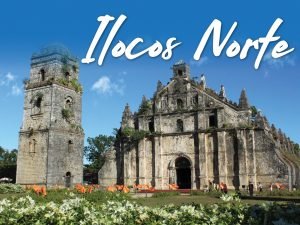
Long before the coming of the Spaniards, there already existed an extensive region (consisting the present provinces of Ilocos Norte, Ilocos Sur, Abra and La Union) which was renowned for its gold mines. Merchants from Japan and China would often visit the area to trade gold with beads, ceramics and silk. The inhabitants of the region, believed to be the Malay origin, called their place “samtoy,” form “sao mi toy,” which literally meant “or language.”
In 1571, when the Spanish conquistadors had established the Spanish City of Manila, they began looking for new centers of administration to conquer. Legaspi’s grandson, Juan De Salcedo, volunteered to lead one of these expeditions. Together with 8 armed boats and 45 men, the 22 years old voyager headed towards the north.
On June 13, 1572, Salcedo and his men landed in Vigan and then proceeded towards Laoag, Currimao and Badoc. As they sailed along the coast, they were surprised to see numerous sheltered coves (“looc”) where the locals lived in harmony. Consequently, they named the region “Ylocos” and its people “Ylocanos”.
As the Christianization of the region grew, so did the landscape of the area. Vast tracks of land were utilized for churches and bell towers in line with Spanish mission of “bajo las campanas”. In the town plaza, it was not uncommon to see garrisons under the church bells. The colonization process was slowly being carried out.
The Spanish colonization of the region, however, was never completely successful. Owing to be abusive practices of many Augustinian friars, many Ilocanos revolted against their colonizers. Noteworthy of these were the Dingras uprising (1589) and Pedro Almasan revolt (San Nicolas, 1660). In 1762, Diego Silang led a series of battles aimed at freeing the Ilocanos form the Spanish yoke. When he died from an assassin’s bullet, his widow Gabriela continued the cause. Unfortunately, she, too, was captured and hanged. In 1807, the sugar cane (“basi”) brewers of Piddig rose up in arms to protest government’s monopoly of wine industry. In 1898, the church excommunicated Gregorio Aglipay for refusing to cut off ties with the revolutionary forces of Gen. Emilio Aguinaldo. Unperturbed, he established the “Iglesia Filipina Independiente.” Aglipay’s movement and the nationalist sentiment it espoused helped restore the self-respect of many Filipinos.
In an effort to gain more political control as a result of the increasing population of the region, a Royal Decree was signed on February 2, 1818 splitting Ilocos into two provinces: Ilocos Norte and Ilocos Sur. Soon thereafter, the provinces of La Union and Abra likewise became independent.
http://museoilocosnorte.com/2008/12/brief-history-of-ilocos-norte/
ILOCOS NORTE TOUR PACKAGE
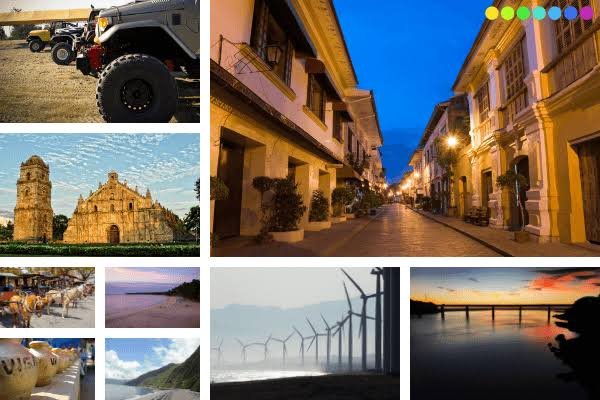
RATE PER PERSON:
P2,900/head for joiners of 5pax & above
P3,000/head for 4pax
P3,100/head for 3pax
P3,400/head for 2pax(private room for 2 persons)
P3,600 for SOLO traveler
INCLUSIONS:
• 2 Nights Room Accommodation :
– No joining of different groups in the same room to protect guests privacy & personal belongings.
– Standard Air-conditioned rooms
• Round trip Van Transfers
– Manila-Ilocos- Manila
– Diesel, Toll fees, Parking fees
• 3 Days Ilocos Tour
• Tour Guide (driver serves as tour guide)
• Entrance Fees
• Environmental Fees
• Permits
*Meals /Optional or Personal activities & others not specified in the INCLUSIONS are at participants account.*
 Ilocos Norte